Do Japanese Students Have to Read a Lot of Books
SSS Extensive Reading Method Proves
To exist an Effective Way to Learn English
Furukawa Akio
SEG
Email: fakio@seg.co.jp
Url:http://www.seg.co.jp/sss/
MS-Word Certificate
SSS Method Has been Changing English language Learning for Adults
Our SSS, or Starting time with Simple Stories is a unique, simple and fun language learning method enjoyed by students of diverse language levels and social backgrounds. The SSS approach, a new extensive reading method, may not be widely known to English language teachers; withal the number of motivated learners is steadily growing in Nippon, Korea, and Taiwan. Some local Telly stations in Nippon featured the SSS method in their programs in 2006.
The History of Extensive Reading in Nippon
Many Japanese teachers, including Natsume Soseki, Matsumoto Toru and Maruyama Masao, emphasized the effect of extensive reading as the imperial road to improving linguistic communication ability. The reading material nearly English teachers recommend to their students for this purpose is popular fiction, such as Sidney Sheldon�fs novels. But these books are actually besides difficult for fifty-fifty average university students to read. Virtually students in university cannot fifty-fifty read books for elementary third graders in English spoken countries. Because Japanese students are accepted to translating every English sentence into Japanese word by word with extensive use of a dictionary, near of them cannot read a volume more than a yard words in length in a reasonable fourth dimension. Therefore nigh Extensive Reading programs at high schools and universities yield limited results.
Critics of Extensive Reading in Japan
Some English teachers assert that learning English through extensive reading is impossible because there are no easy books suitable for their students, and that the amount of reading required to acquire proficient English language skills is too much for any educatee to achieve. They merits that the grammar translation method is far meliorate than the extensive reading method because the students tin can understand English sentences fully through Japanese. However, the grammar translation method is the principal reason that near Japanese students have not achieved a practiced power to speak, write, listen to and read in English.
SSS Extensive Reading Method
Our SSS method solved the primary difficulty in the classical all-encompassing reading method that there are no like shooting fish in a barrel-to-read books for students. In our method, learners start with moving-picture show books with a few words on a page. Many learners who start with uncomplicated stories tin read a large number of books without difficuly, and they can reach the goal of reading one million words in six months to two years. Since elementary school students in English spoken countries read one million words on average per year, and almost of the learners in Nippon who achieved one million words do and then by reading English language novels as a hobby, we fix the first goal of all-encompassing reading equally reading one one thousand thousand words in English. Therefore, our method is often referred to as the �gOne Million Words Extensive Reading Approach�h, or �gHyakumango Tadoku�h.
Why SSS ER has succeeded in Nihon
X years ago, it was almost impossible to become the big quantities of strange published, like shooting fish in a barrel-to-read books necessary for this approach, but the state of affairs has inverse in contempo years. Now we can buy a broad range of English language paperbacks in Japan at reasonable prices. Even elementary picture book series such as Oxford Reading Tree (ORT) and Longman Literacy Land (LLL) have get bachelor in many bookstores in Japan. Many of the SSS readers who started all-encompassing reading with such easy picture books have accomplished an power to read popular paperbacks such as �gThe Da Vinci Code�h in a very short period, ranging from six months to two years. Fifty-fifty students who start to learn English in the starting time grade of inferior high school can read children�fs books such as �gThe Magic Tree House Serial�h or �gRainbow Magic Series�h, in which each book is more than than four grand words in length.
The Three Aureate Rules for All-encompassing Reading
Most English language teachers in Nihon put too much emphasis on looking up difficult words in English-Japanese dictionaries, and ask students to interpret every sentence into Japanese. However, excessive use of dictionaries puts besides much stress on students and hinders them from leaning English.
As an alternative to this, the idea of the SSS (Kickoff with Uncomplicated Stories) plan was commencement introduced by Sakai Kunihide, a professor at the Academy of Electro-Communications, who advocated the Three Golden Rules:
1) No dictionaries while reading
2) Skip over difficult words
3) Stop reading when it is slow or as well difficult.
In other words, read like shooting fish in a barrel books that you tin understand without dictionaries, don�ft endeavor to empathise the content completely and alter to a book �@ which seems more interesting to you, if necessary. Through this program, many students at high schools, universities, language schools and jukus, or cram schools, have shown significant progress in their language skills.
Three Features of SSS Method in the Classroom
Most English teachers hold that the total corporeality of English language input is 1 of the keys to acquiring good English language skills. Nonetheless, until now, this was measured mainly past the hours that students studied English. The SSS method is unique in that we measure the corporeality of input by the full number of words that students read or mind to. By totaling the words and checking the records students keep, teachers can estimate their students�f English language level easily and correctly and give appropriate advice co-ordinate to their individual levels.
The 3 main features of the SSS method through extensive reading in the classroom are every bit follows:
one) Start with unproblematic stories and gradually increase the level, length, and difficulty of the books using diverse titles from Leveled Readers (LR) written for native English language speaking children, Graded Readers (GR) written for English learners as a second language, books for children and immature adults, picture books and manga.
2) Read books not merely at home, but also in the classroom.
3) Record the titles students read, total the number of words they read and requite individual advice to students by looking up the records they go along in their logbooks.
We publish a special notebook every bit a logbook, which is known
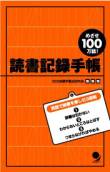
(ISBN:4902191267), from Cosmopier Publishing Company.
Information technology contains the word count data for Penguin Readers,
Penguin Young Readers, Oxford Bookworms,
Oxford Dominoes, Cambridge English language Readers,
Macmillan Readers, Macmillan New Wave Readers,
Oxford Reading Tree, Longman Literacy Land,
All Aboard Reading, DK Graded Readers,
I Can Read Books, Puffin Easy-to-Read Readers, R.I.C. Headlight Readers, Rookie Readers, Scholastic Readers, Step Into Reading Readers and many children�fs books.
How to Prepare an Extensive Reading Program at Your School
Preparation for the class is important when starting a successful extensive reading class. You lot tin see how much English ability your students learn as they continue their extensive reading for several years.
Ten pieces of advice for a successful extensive reading program are as follows:
one) Endeavor to have your Japanese colleagues and boss read �gHyakumango Tadoku Nyumon�h(�gExtensive Reading for Beginners�h, Cosmopier Publishing, ISBN:4902091250), �gKyoshitsu de Yomu Eigo Hyakumango�h(�gExtensive Reading in the Grade Room�h, Taishukan, ISBN 4469245046) and �gEigo Tadoku Kanzen Gaido�h (�gThe Complete Book Guide for All-encompassing Reading�h, Cosmopier Publishing, ISBN: 4902091321). They will easily get the idea of the extensive reading approach. You have to get across the idea of the Three Golden Rules for ER, and also YL, which is the �gYomiyasusa Level�h, a way of grading the difficulty of books for the Japanese , and also the full number of words the students read.
2) Every bit an instructor, try to read equally many very easy books as possible. If you read the same books as your students, you tin easily understand if they really read or enjoyed the books after a little conversation with them. The fundamental to the success of the all-encompassing reading program is to build conviction and non to pressure level the students. It is very important to encourage them. If you lot have read a lot of the same books which they read in your class, you tin share the joy of having books in mutual.
iii) Make a plan to implement the ER program at your school. It is especially important to make up one's mind how many hours yous can allot for ER and from what class you tin start.
4) For your beginning ER program, make up one's mind whether to run an ER program in regular classes or selective classes.
5) Make a budget for the ER program. If you take twoscore students in the same school period, y'all need 700 books at least for SSS ER program.
6) Select the book titles and order them. As you lot know, it can have a long fourth dimension, if the bookstores do not have ample books in stock.
vii) Decide on the assessment process. Extensive reading aims to make reading fun, �@ and to take the pressure off students. Assessment may work confronting this. You accept to find an appropriate way that is consistent your own assessment and evaluation practices.
�@
8) Detect a successful SSS ER class. At that place are only a small number of teachers who use the SSS ER program in their classrooms. Observing a grade will requite yous tips for your own class.
ix) Make a list of the titles and the number of words in each volume. This will help to motivate the students, every bit some students really want to read every book in a series.
10) Annunciate your new program. SSS ER is a new but very powerful way to learn English. It is of import to show the students and their parents the utility of SSS ER. Some information is available that shows how effective our SSS ER programs are.
I will explain these ten pieces of tip in detail.
1) Yomiyasusa Level
Nosotros already have several ways of grading the difficulty of English readers. The most famous of these for learners of English every bit a 2d language is the EPER grading organization, which was adult by the Edinburgh Project on Extensive Reading (http://world wide web.ials.ed.air conditioning.u.k./eper.html). You can see details in �gExtensive Reading in the Classroom�h past Richard R. Day and Julian Bamford from Cambridge University Press. The EPER arrangement is a very good one, but it is not well suited to English language beginners in Japan. The difference betwixt English and Japanese is larger than the difference between English language and other European languages, so it is more hard for Japanese people to larn English. Many native speaking English teachers recollect the Penguin Easystarts series is very easy to read, then they are placed at the everyman EPER level, but they are often too difficult for many students of average English abilities at Japanese universities. We need to define the levels more than carefully for English learners in Nihon.
The Yomiyasusa level was invented by ordinary English learners (not teachers) who read English books using the SSS method. �gYomiyasusa�h means readability, and information technology is oftentimes abbreviated as YL. We decide the YL of each volume by considering the following factors:
a) difficulty of headwords
b) grammar level
c) boilerplate length of sentences
d) total word counts
d) size of fonts
e) with or without pictures
f) storyline
g) easiness of proper names.
YL ranges from 0.0 to 10.0. YL 0.0 indicates the level of picture books without words except for the title on the cover. YL 10.0 indicates the hard books that are not suitable for English learners. For example, Oxford Reading Tree Stage 1+ is YL 0.1 and the YL of Penguin Easystarts is 0.8. Ulysses by James Joyce is YL 10.0. Yous can look upward our YL tables in the reference [ane], �gHyakumango Tadoku Nyumon�h(�gExtensive Reading for Beginners�h, ISBN 4902091250) and �gTadoku Kanzen Gaido�h (�gThe Complete Volume Guide for Extensive Reading�h, ISBN: 4902091321).
Recently Dr. Rob Waring has created another new scale, which is more than intuitive than that of EPERs. His new scale will presently appear at http://www.erfoundation.org .
2) Try to read ORT, LLL, and ICR
Y'all might think children�fs books are too deadening for the ordinary developed. It is true that about children�fs books, peculiarly the books for very young children, are also kittenish for junior and senior high students and university students, merely some of them are really interesting, even for adults. The 3 all-time series are the Oxford Reading Tree (ORT) Kipper Series past Roderick Hunt and Alex Brychta from Oxford Academy Press, the Longman Literacy Land (LLL) Story Street Series by Jenny Alexander and al. from Pearson Education and the I Can Read Book (ICR) Frog and Toad Series past Arnold Lobel from Harper Bays. These books are very easy to read and even learners who accept studied English only for a few hours in junior high school can read some of them with the help of a CD. If you lot read them, you will rediscover how fun and like shooting fish in a barrel it is to share the joy of reading with your students.
ORT and LLL, which are originally published for British elementary schools, are series in which the same characters appear in each volume, so although each volume is very simple, the whole series creates a big imaginary world. In Nippon, series like these can exist enjoyed not only by very young English learners, only too by adult learners.
The Frog and Toad Series is written in very plain English language but the heartwarming pictures are very moving for both young readers and adult readers all over the world. Some books take been translated into Japanese, and many Japanese people know the storylines, which help them read more confidently. Other ICR books such as the Biscuit Series are also enjoyed by Japanese learners.
3) What type of ER Plan should y'all select?
Information technology is widely believed that students should learn English language from English teachers in class, and that they should read books non in the class, but at home.
Therefore, the students perform the ER program as homework or as an extra curricular activity. Only in our experience, nosotros have found that conveying out the ER program in the class has many advantages.
a) Teachers can observe the students reading their books. They can give specific advice to each student.
b) Students take little fourth dimension to read at dwelling, as they are busy with homework from other subjects. Some students even cheat in their reading log when they do not accept fourth dimension to read at home. Reading in class ensures all students meet the program�fs requirements and exercise not fall behind other students.
c) Students tin talk about books they have read and share the joy of reading.
Many teachers who arrange the SSS ER methods share the joy of improved English language ability with their students.
iv) Regular Class or Elective Class?
The ER program requires a lot of books. Even the classical ER programme needs at least four books per student. Since our new SSS ER programme starts with very simple stories, information technology requires a lot of easy books from YL 0.ane to YL 2.5.
To start a successful SSS ER program, you need at to the lowest degree 500 very piece of cake picture books with YL less than i.0, because you need at least one re-create of ORT series from Stage 1 to Stage 9 (160 titles), LLL Story Street serial (120 titles), Step into Reading series from level 1 to level 2 (sixty titles), I Can Read Books series from level 0 to level 2 (80 titles), Penguin Readers Easystarts series (30 titles) and Oxford Bookworms Starter series (twenty titles). Since most students will attain YL two.5 or more than in a year, you need more books with YL from ane.0 to 4.0 for the avant-garde students. See the table in reference [2]. That shows the relation between YL and the full number of words that a student has read.
SSS ER programme helps you lot estimate the approximate number of books you lot need equally follows.
Let's assume that you take thirty 45 minute ER lessons in a year, and let 10 be the number of students taking the ER course in the aforementioned schoolhouse period. Your SSS ER program requires at least 500+5x books approximately. That ways if you take 40 students in the same school period, you need 500+200=700 books at least. The price of each volume is \600 on average, so y'all need \420,000 to set up an SSS ER plan if the number of students in your class is 40. If y'all recommend that students borrow several books from the ER library at a time, the minimum number of books is 500+5x+10y, where y is the full number of students in your ER plan.
If your ER lesson is 90 minutes a week, the minimum number of books is 500+10x or 500+10x+10y.
Therefore I strongly advise you put the ER program in an elective class at offset. If yous would like to introduce the ER programme in every regular class, y'all should kickoff with a 20 to thirty minute ER program. There will be various learning styles amid your students. Some volition need a lot of very easy-to-read books, while others will need more difficult books such every bit Penguin Readers Level v to 6 or Holes past Louis Sachar. Therefore, if you want to commencement a full ER program for your whole class, you should prepare a large number and broad diverseness of books.
5) Make a Budget
Drawing upwardly a budget for the ER is a key and essential step.
When starting a successful ER plan, it is better to go an actress budget over and higher up your ordinary budget. Academy employees are eligible for a Scientific Research Grant from the Ministry of Education and Scientific discipline. For public junior or senior high teachers, the head teacher of your school or schoolhouse librarian may assistance you lot. No thing how little your students currently utilize the library, there is a potential that a groovy many will bring together the Extensive Reading program, so getting the librarians involved in the ER is strongly recommended. For private school teachers, it is easier to get a budget if you persuade your caput teachers. Schools often inquire the students for pay a minor fee for the ER. Many teachers who set upwardly ER programs collect approximately \ii,000 per year from each student.
To convince the caput of schoolhouse, explain the effects and good points of ER thoroughly. The improve he or she understands ER, the better your chance of success.
6) Select Book Titles
Many English language teachers have a tendency to select books which are at a higher level than their students�f true levels. Information technology is as well widely believed that there should be only one copy of every title when the budget is limited.
My communication is as follows:
a) Try to select easier books than you think is appropriate, because most of your students have not been trained to read English books without a dictionary.
b) Choose books by asking for information about popular books from teachers who have already started successful ER programs.
c) For pop books, place an order for 2 or three copies each so that the students can enjoy reading simultaneously and exchange ideas immediately after reading.
This will highly raise the motivation of the students and likewise build confidence in their English reading. Confidence and praise are keys to English language learning. Book choice is important in running an ER program successfully. You should be the first one to try out the easy-to-read books. If you need any aid, delight feel free to ask an extensive reading consultant in an ELT bookstore. Bring together the Extensive Reading Association (ERA, http://www.seg.co.jp/era/ ), and become advice from its members and likewise borrow books for ER from ERA.
seven) Decide on the Assessment Procedure
If we emphasize the amount of reading too much, students are apt to cheat in their book log, and so it is desirable to assess their English ability independently from the book log. Some teachers use comprehension tests, cloze tests, or tests from outside the schoolhouse, such equally TOEIC, SLEP, and ACE.
8) Observe a Successful SSS ER Class .
Extensive reading in the classroom, especially our SSS ER method, is the newest way of teaching English. But a few teachers conduct English language classes through the SSS ER method. Education English linguistic communication through the ER program is radically different from the traditional way of education. The students learn English mainly through reading. What the teachers do in the class is give advice, cull the advisable books and and then on, so observing the form will requite you tips for your course. Yous can get more information about teachers who teach English through the SSS ER method past e-mailing the Extensive Reading Clan at era-jimu@seg.co.jp.
9) Make a List of Book Titles and the Number of Words
In the SSS ER method, students are required to keep a log in a notebook or on a sheet of paper. It is important that students tin can notice the number of words in the books they read in an easy and quick manner. At that place are two means to assist students to find the number of words easily. One way is to put a sticker with the number of words written on information technology on every volume in your library. The other manner is to make a list of the titles, YL and the word counts in your entire library. If yous make a list grouped past series, some students will desire to read every book in a series, and it tin can exist an fantabulous motivation to continue extensive reading. You tin can get data about the number of words in books at the post-obit websites;
http://world wide web.seg.co.jp/sss_review/jsp/frm_a_130.jsp,
http://src.scholastic. com/ecatalog/,
http://www.amazon.com/.
You can too consult �1000The Complete Volume Guide For Extensive Reading�h or �gThe Notebook for Extensive Reading�h(The Orangish Book).
x) Advertise Your New Program .
Our SSS ER method is a new but a very powerful style to larn English language. Students should empathise the significance of ER, and the cooperation of parents is desirable. Data shows how constructive our SSS ER is. For more information, please refer to: Professor Nishizawa at Department of Electrical Applied science at Toyota Technical College (nisizawa@toyota-ct.air conditioning.jp), Professor Sakai at English Department at the University of Electro-Communications and Dr. Takase at English Section of Kansai University.
References (Tables & Samples)
[1] Table: YL Tabular array for Children�fs Books and Graded Readers.
http://www.seg.co.jp/sss/information/YL_Table_2006.xls
[two] Information: Relation between YL and The Total Number of Words that a Student Have Read..
http://www.seg.co.jp/sss/information/YL_TNW.xls
[3] Sample: A list of book titles and word counts for a class
http://www.seg.co.jp/sss/information/2006-jh1-Spring-BookList.xls
[iv ] Sample: A volume log Excel file by an adult learner.
http://www.seg.co.jp/sss/information/Adult_TKY_20041017_TMW.xls
[5] Sample: A copy of a canvass of the starting time page of a book log by a junior-high school student.
http://www.seg.co.jp/sss/information/booklog-image.jpg
[half-dozen] A list of books from YL 0.0 to 0.9 with give-and-take counts
References (Books)
Day, R. and J. Bamford, (1988). All-encompassing Reading in the 2d Language Classroom. Cambridge, U.K.:Cambridge University Printing.
Furukawa, A. (2002). Toward One Million Words Pocket Volume , (Dokusho Kiroku Techou in Japanese) . Tokyo: Cosmopier Publishing.
Furukawa, A. and Thou. Mariko (2003). Let's First I Million Words Extensive Reading From Today , (Kyokara Yomimasu Eigo Hyakumango in Japanese) .Tokyo: Japan Jitsugyou Shuppan.
Furukawa, A. and S. Itoh, (2004). All-encompassing Reading Towords One Million English language Word for Parents and Children , (Oyako de Hajimeru Eigo Hyakumango in Japanese) . Tokyo: Nihon Jitsugyou Shuppan.
Furukawa, A. and S. Itoh, (2005). Toward One Million Words for Beginners , (Hyakumango Tadoku Nyumon in Japanese) . Tokyo: Cosmopier Publishing.
Furukawa, A. and al, (2005). The Complete Book Guide for Extensive Reading, (Eigo Tadoku Kanzen Bukkugaido in Japanese) . Tokyo: Cosmopier Publishing.
Maruyama, M. (1949). Some Pieces of Advice Nearly Study, (Bengaku ni Tsuite no Ni-san no Jogen in Japanese). Tokyo: Misuzu Shobou.
Matsumoto, T.(1965). A New Way to Learn English, (Eigo no Atarashii Manaabikata in Japanese). Tokyo: Kodansha.
Natsume, S.(1906). Modern Reading Method ,Gendai Dokushohou in Japanese. Yumani Shobou.Sakai, K. (2002) Towards One One thousand thousand Words and Beyond, (Kaidoku Hyakumango in Japanese). Tokyo: Chikuma Shobo.
Sakai, K. and M. Kanda, (2005). Extensive Reading in the Classroom, (Kyoshitsu de Yomu Eigo Hyakumango in Japanese). Tokyo: Taishukan Shoten.
Acknowledgement
Source: https://www.seg.co.jp/sss/information/SSSER-2006.htm
0 Response to "Do Japanese Students Have to Read a Lot of Books"
Post a Comment